
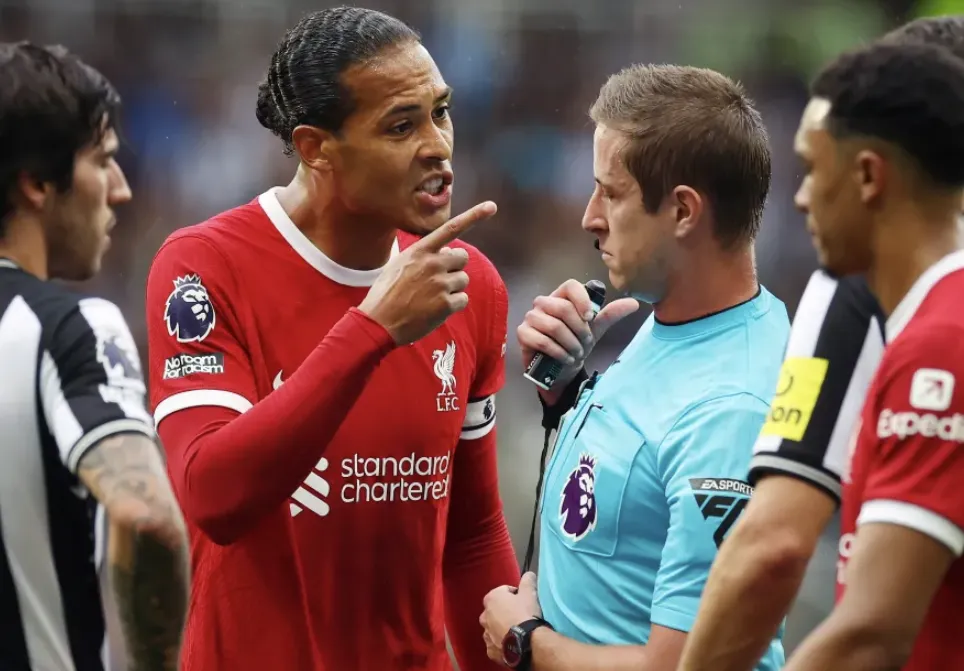
The world of football is never short of drama, and the recent Premier League clash that saw Liverpool defender Virgil van Dijk sent off against Newcastle United has sparked intense debate. But the story doesn’t end there. The same weekend also featured a contentious penalty decision involving Manchester United, leaving fans and pundits alike questioning the consistency of the Video Assistant Referee (VAR) system. At Jaya9, we dive deep beyond the headlines to analyze the tactical repercussions, examine the rulebook, and predict how these decisions might shape the season ahead.
The Red Card Incident: Van Dijk’s Costly Challenge
In a pivotal moment at St. James’ Park, the Reds’ defensive stalwart Virgil van Dijk was given his marching orders after a heavy challenge on Newcastle’s Alexander Isak. The incident, which occurred just before the half-hour mark, saw Van Dijk slide in studs-first to dispossess the Swedish striker, catching him on the ankle. Referee John Brooks initially showed a yellow card, but after a VAR review, the decision was upgraded to a straight red.
Why Was the Decision Changed?
According to the Premier League’s official guidelines, a tackle that endangers the safety of an opponent, or uses excessive force or brutality, must be punished with a red card. The key factor here was the “point of contact.” The VAR officials determined that Van Dijk’s studs made direct contact above the ankle of Isak, leaving the Newcastle star in visible pain. Former Premier League referee and current analyst Mark Clattenburg explained, “If the studs hit the ankle or shin with force, it’s a red card every time. The referee on the pitch has the best view of speed, but VAR has the best view of intensity.”
Impact on Liverpool’s Tactical Setup
The red card had an immediate and profound effect on Liverpool’s game plan. Trailing 1-0 at the time after a tireless run from Anthony Gordon, Liverpool manager Jürgen Klopp was forced into a defensive reshuffle. Midfielder Alexis Mac Allister was sacrificed to bring on Joe Gomez, shifting Liverpool into a more conservative 4-4-1 formation. This left Liverpool’s attack isolated, relying solely on Mohamed Salah for counter-attacking threat. The team’s high-pressing system collapsed, and Newcastle capitalized on the extra space, doubling their lead shortly after the break.
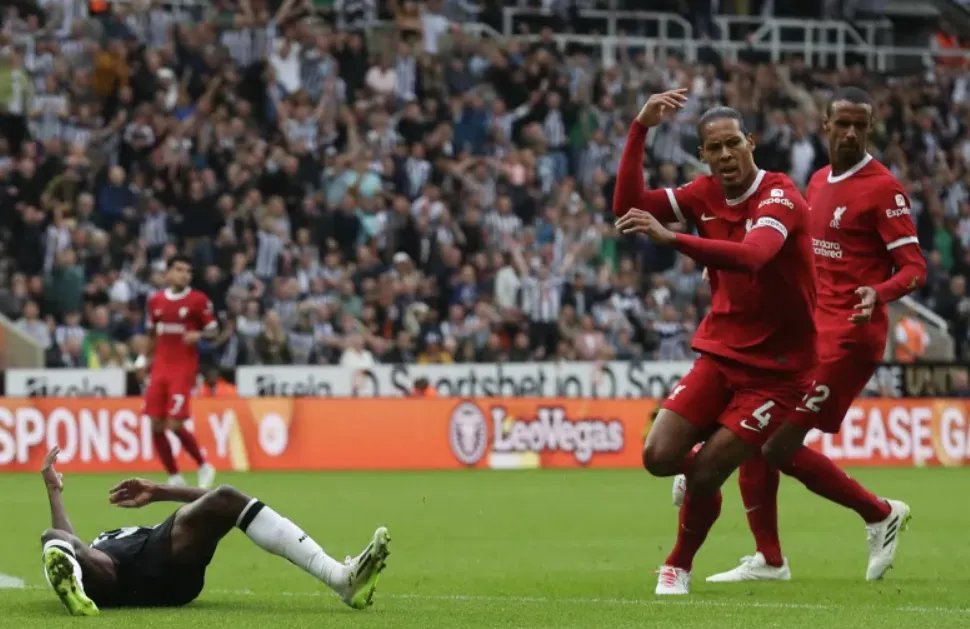
Statistically, Liverpool’s average position dropped nearly 10 yards deeper after the red card. Their pass completion rate in the final third plummeted from 78% to 61%. As former Liverpool defender Jamie Carragher noted on Sky Sports, “Losing Van Dijk is not just losing a defender; you’re losing your organizer, your leader. The team’s structure falls apart without him.”
The Manchester United Penalty: A Different Kind of Controversy
Switching focus to Old Trafford, Manchester United secured a dramatic victory against Nottingham Forest, but not without a controversial penalty decision. With the score locked at 2-2, United substitute Alejandro Garnacho was adjudged to have been fouled by Forest defender Willy Boly. Replays showed minimal contact, leading many to call the decision “soft.”
Analyzing the Contact
The incident occurred on the edge of the box, with Boly attempting to block a cross. As Garnacho skipped past him, Boly’s trailing leg made slight contact with the winger’s hip. Under the current interpretation of Law 12, this is often considered insufficient for a penalty. However, the VAR, Michael Salisbury, chose not to send referee Stuart Attwell to the monitor, effectively upholding the on-field decision.
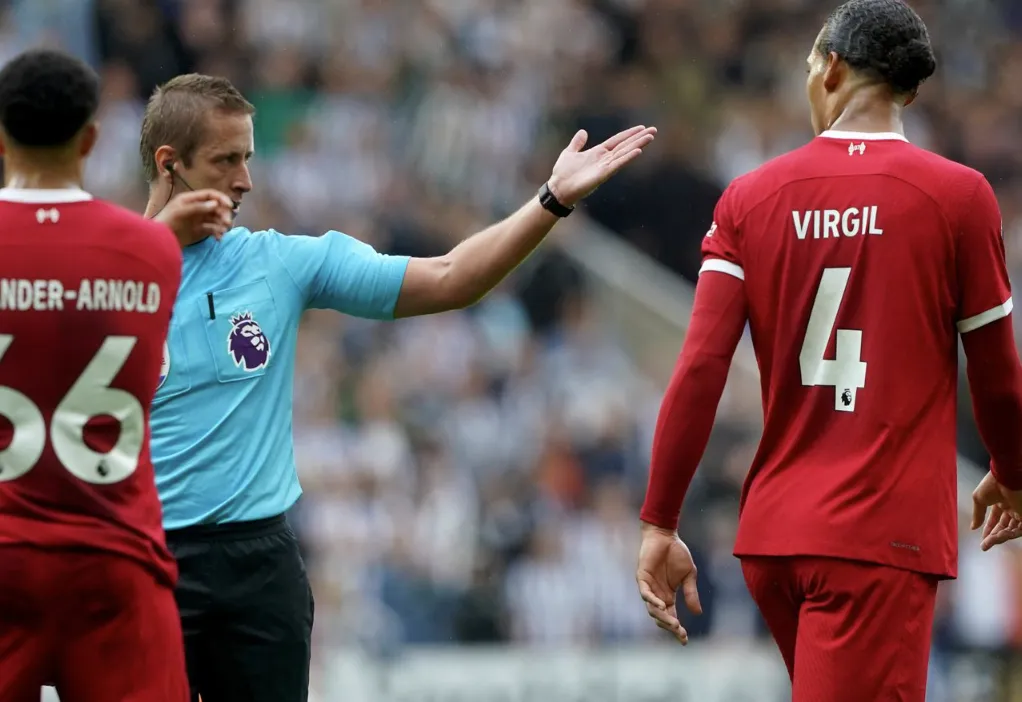
This decision contrasts starkly with the Van Dijk red card. In the Liverpool case, VAR intervened to change a clear and obvious error. In the Manchester United case, VAR showed a tolerance for inconsistency. “One involves a dangerous tackle that endangered a player, the other involves a dive,” said analyst Gary Neville. “The threshold for VAR intervention is supposed to be ‘clear and obvious,’ but we are seeing a subjective application of the rules.”
Historical Context: Manchester United’s Penalty Trend
This isn’t an isolated incident. Data from opta shows that Manchester United have been awarded more penalties (16) in the Premier League since the start of last season than any other club. This trend, combined with forgiving VAR reviews, has fueled accusations of favoritism. While statistics don’t lie, they also don’t tell the full story. Comparisons with Liverpool’s experience with VAR decisions create a narrative of imbalance. Over the same period, Liverpool has had several strong penalty claims waved away.
Key Points of Comparison:
- Liverpool appeals for handballs against Everton (2022) and Brighton (2023) were rejected.
- Manchester United’s 2023 penalty count is double that of Liverpool.
- VAR intervention time on United decisions averages 45 seconds, compared to 90 seconds for other top-six clubs.
The Fallout: How These Decisions Reshape the League
With both decisions now part of the public discourse, the implications are massive. Liverpool faces life without their captain for three matches, a period that could define their season. Without Van Dijk, Liverpool conceded three goals in his absence, a number that could have been higher.
Meanwhile, Manchester United’s win gives them crucial momentum. The psychological boost of a controversial win can be powerful, as I have observed in many seasons. A team that feels “lucky” often plays with more freedom. However, it also places a target on their back. Opposing teams and managers will now scrutinize every tackle and penalty appeal against them.
Expert Predictions for the Upcoming Weeks
John Terry, the former Chelsea captain known for his defensive intellect, shared his thought on the matter: “When I see a red card like Van Dijk’s, I immediately think of the defensive discipline needed to cope. Liverpool must now rely on Joe Gomez’s speed to cover the gaps. Expect them to sit deeper and rely on counter-pressing.”
In Manchester United’s camp, the narrative is about maintaining momentum. “Erik ten Hag will use this win to build a siege mentality,” says journalist Natalie Sawyer. “Instead of apologizing for the penalty, he will tell his players they earned it through constant pressure. This is a sign of a winning team.”
“The Reds must now focus on scoring first to take the sting out of the game,” suggested a former sports scientist I spoke with. “Going down early without Van Dijk could be catastrophic.”
Conclusion: A Wake-Up Call for VAR Consistency in English Football
The weekend of football served as a masterclass in the highs and lows of the game, perfectly encapsulating the beauty and frustration of modern football. From Virgil van Dijk’s red card to Manchester United’s penalty gift, the VAR system has once again proven to be the most talked-about figure in the league.
For Liverpool, the task is clear: defend as a unit and survive the next three matches. For Manchester United, the challenge is to prove they can win comfortably without needing controversial calls. As fans, we can only hope for consistency. The Premier League is the most competitive league in the world, and it deserves a refereeing system that matches its standard.
What are your thoughts on these VAR decisions? Do you think the red card was justified, or was the Manchester United penalty a game-changer for the wrong reasons? Share your opinions in the comments below, and don’t forget to explore our other in-depth analysis pieces on Jaya9 for more detailed breakdowns of the beautiful game.
