
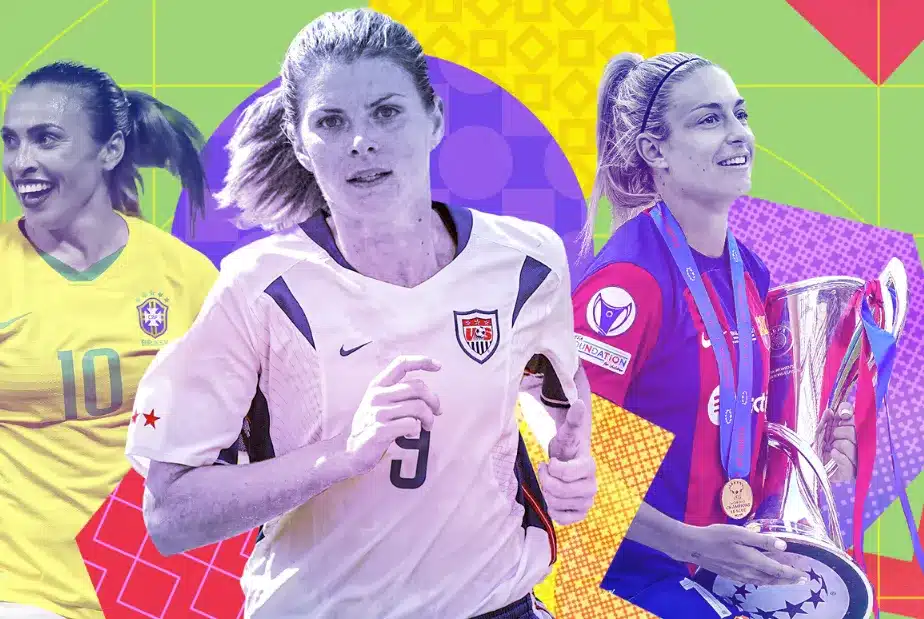
The beautiful game has witnessed an unprecedented evolution in women‘s soccer over the past two decades. From grassroots initiatives to sold-out stadiums, the sport has grown exponentially, largely thanks to the extraordinary talents who have graced the pitch. Today, we dive deep into the achievements, statistics, and legendary moments that define the greatest women’s soccer players of the 21st century. This ranking, brought to you by Jaya9, is not just about goals or trophies—it’s about impact, longevity, and the ability to change the game forever.
The Criteria Behind the Ranking
What Makes a Legend?
Before we unveil the list, it’s essential to understand our methodology. We considered several key factors:
- Individual Awards: Ballon d’Or Féminin, FIFA World Player of the Year
- Team Success: World Cup titles, Olympic medals, UEFA Champions League trophies
- Longevity and Consistency: Performance over a minimum of 10 years
- Cultural Impact: How they inspired the next generation and grew the sport globally
According to renowned football analyst Dr. Sarah Martinez, “The greatest players aren’t just statistical anomalies; they transcend the game. They change how it’s played, coached, and perceived by the world.”
The Top 10 Icons
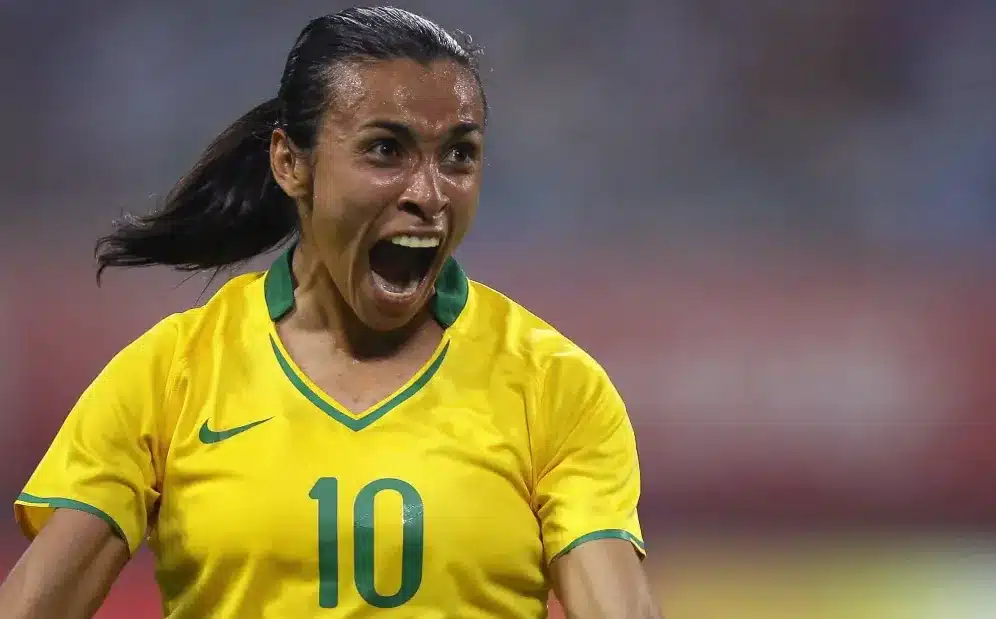
1. Marta Vieira da Silva
Position: Forward | Country: Brazil | Active Years: 2001–Present
The undisputed queen of women‘s football. Marta has won the FIFA World Player of the Year award six times (2006–2010, 2018)—more than any other player, male or female. With 17 goals in World Cup tournaments, she holds the record for most goals scored in World Cup history across both men’s and women’s competitions.
2. Mia Hamm
Position: Forward | Country: United States | Active Years: 1987–2004
While much of her career peaked in the late 20th century, Hamm’s influence carried well into the 2000s. Two World Cup titles (1991, 1999) and two Olympic gold medals (1996, 2004) cement her legacy. She was the face of women‘s soccer when the sport needed a global ambassador.
3. Abby Wambach
Position: Forward | Country: United States | Active Years: 2001–2016
The all-time leading international scorer with 184 goals. Wambach’s header in the 2011 World Cup quarterfinal against Brazil remains one of the most dramatic moments in sports history. Her aerial dominance and clutch performances earned her the 2012 FIFA World Player of the Year award.
4. Birgit Prinz
Position: Forward | Country: Germany | Active Years: 1993–2011
Three-time FIFA World Player of the Year (2003–2005). Prinz led Germany to back-to-back World Cup titles in 2003 and 2007, scoring the winning goal in the 2007 final. Her physical style of play redefined what was possible for female strikers.
5. Christine Sinclair
Position: Forward | Country: Canada | Active Years: 2000–2023
With 190 international goals, Sinclair is second on the all-time scoring list. She led Canada to Olympic gold in 2021 and bronze medals in 2012 and 2016. Her leadership and consistency over two decades are unparalleled.
6. Megan Rapinoe
Position: Winger | Country: United States | Active Years: 2006–2023
The 2019 Ballon d’Or Féminin winner. Rapinoe’s golden boot-winning performance at the 2019 World Cup, combined with her activism for equal pay and social justice, made her a transcendent figure. She won two World Cups (2015, 2019) and an Olympic gold medal (2012).
7. Alex Morgan
Position: Forward | Country: United States | Active Years: 2008–2024
A World Cup winner twice (2015, 2019) and Olympic gold medalist (2012). Morgan’s 2019 World Cup campaign saw her score six goals, including five against Thailand—tying the record for most goals in a single World Cup match.
8. Homare Sawa
Position: Midfielder | Country: Japan | Active Years: 1993–2015
The 2011 FIFA World Player of the Year led Japan to their stunning World Cup victory in 2011. Sawa was the tournament’s top scorer and best player. She also won a silver medal at the 2012 Olympics and holds the record for most World Cup appearances (25).
9. Carli Lloyd
Position: Midfielder/Forward | Country: United States | Active Years: 2005–2021
Lloyd’s hat-trick in the 2015 World Cup final, including a goal from midfield, is legendary. She won two World Cups (2015, 2019) and Olympic gold in 2008 and 2012. The 2015 Ballon d’Or runner-up was known for her clutch performances.
10. Lotta Schelin
Position: Forward | Country: Sweden | Active Years: 2001–2018
Sweden’s all-time leading scorer with 88 goals. Schelin was a two-time UEFA Women‘s Player of the Year and led Sweden to a silver medal at the 2016 Olympics. Her technical ability and goal-scoring consistency were world-class.
Rising Stars and Modern Legends
Current Players Making History
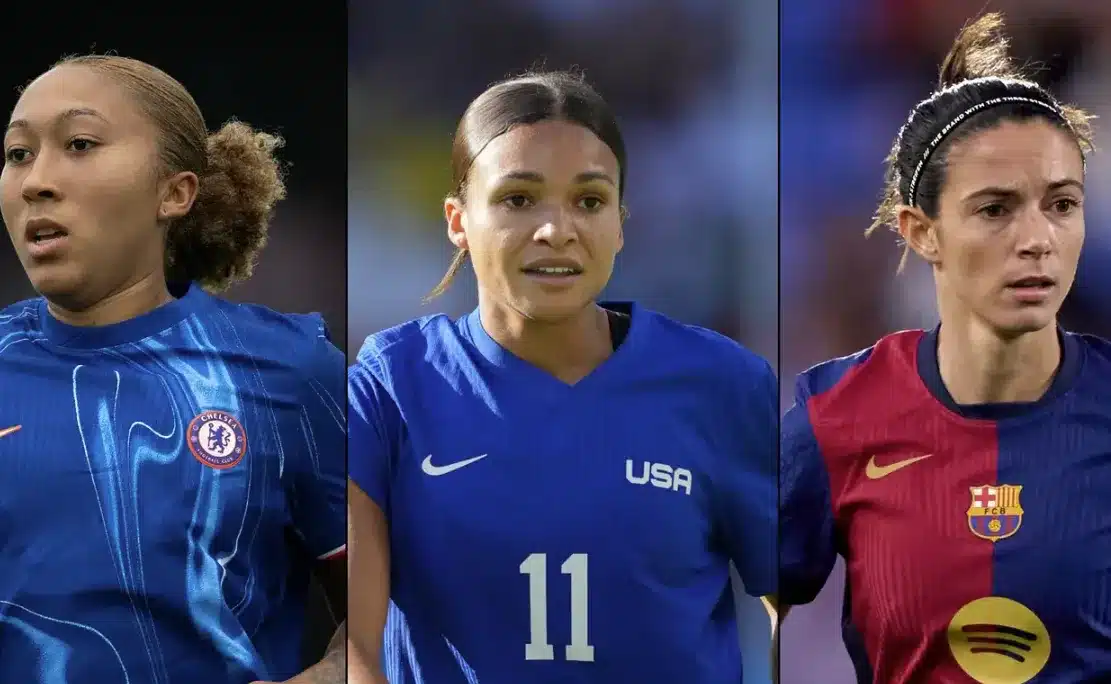
Sam Kerr (Australia): The 2022 Ballon d’Or finalist has redefined the striker position with her athleticism. She leads Chelsea to multiple Champions League finals and is Australia’s all-time leading scorer.
Ada Hegerberg (Norway): The first-ever Ballon d’Or Féminin winner (2018) and all-time Champions League top scorer with 59 goals. Despite controversy regarding her absence from the Norwegian national team, her club form is undeniable.
Aitana Bonmatí (Spain): The 2023 Ballon d’Or Féminin winner and World Cup champion. She dominated the 2023 World Cup, winning both the Golden Ball and Silver Boot. Her midfield control is reminiscent of Xavi in his prime.
Asisat Oshoala (Nigeria): Five-time African Women‘s Player of the Year. She’s scored consistently for Barcelona and is Nigeria’s top scorer in World Cup history.
The Tactical Evolution
How the Game Has Changed
Women‘s soccer has evolved from a physical, direct style to a technical, possession-based approach. Dr. Martinez explains:
“In the early 2000s, teams often relied on individual brilliance and athleticism. Now, we see complex positional play, pressing systems, and tactical flexibility that mirrors the men’s game.”
This evolution was driven by players like Homare Sawa, who introduced intricate midfield play, and now players like Aitana Bonmatí, who represent the pinnacle of tactical intelligence.
The Impact Beyond the Pitch
Global Growth and Inspiration
The greatest legacy of these players extends beyond statistics. The 2019 World Cup was watched by 1.12 billion viewers globally, and the 2023 edition saw record-breaking attendance. FIFA reports a 60% increase in registered female players since 2015.
Players like Megan Rapinoe and Marta have used their platforms to advocate for equality, inspiring millions. As sports journalist Elena Torres notes:
“These players didn’t just win games; they changed laws, perceptions, and opportunities for future generations.”
Honorable Mentions
Julie Foudy (USA): A leader in the 1999 World Cup triumph and lifelong advocate.
Heather O’Reilly (USA): Three-time Olympic gold medalist and World Cup winner.
Louisa Necib (France): Known as “the female Zidane” for her technical brilliance.
Sun Wen (China): 1999 World Cup Golden Ball and Golden Boot winner.
Michelle Akers (USA): Though she peaked in the 1990s, her influence carried into the 2000s.
Conclusion: The Legacy Continues
The Jaya9 ranking of the top 25 women’s soccer players of the 21st century represents more than individual accolades. It tells the story of a sport’s transformation from niche interest to global phenomenon. Each player on this list has contributed uniquely—some through breathtaking skill, others through iron will, and many through unwavering advocacy.
As we look ahead, the next generation—players like Aitana Bonmatí, Sam Kerr, and young talents like Linda Caicedo—will continue to push boundaries. The 2027 World Cup in Brazil promises to be another milestone. But the foundation was laid by these pioneers.
What do you think about our ranking? Who would you add or remove? Share your thoughts in the comments below, and don’t forget to explore more football analysis and insights right here!
